Programming languages and computer coding have made life simpler for us. Whether it’s automobiles, banks, home appliances, or hospitals, every aspect of our lives depends on codes. No wonder, coding is one among the core skills required by most well-paying jobs today. Coding skills are especially useful within the IT, data analytics, research, web designing, and engineering segments.
Even with competition from new languages, the demand for Java developers remains strong. In fact, Java is among the most in-demand programming languages on the job market
Java is usually the default choice for scientific applications, including natural language processing. From laptops to data centers, game consoles to scientific supercomputers, cell phones to the Internet, Java is everywhere!

Java is used to build applications and platforms for a number of devices, including computers, laptops, gaming consoles, Blu-ray players, car navigation systems, medical monitoring devices, parking meters, lottery terminals and smartphones. It is also a key language for networking, particularly for data centers that store and transfer Web-based data. Java is also used to create miniature, dynamic programs that run alongside or are embedded within Web pages. These programs are called applets and can be used to display maps, weather, games or other interactive widgets or tools on a Web page.
Advantages of Java
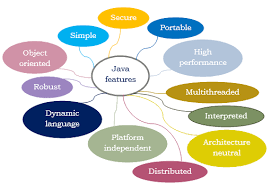
- Write Once, Run Anywhere : This means that the most important promise of Java technology is that you only have to write your application once–for the Java platform–and then you’ll be able to run it anywhere.
- Security : The Java platform allows users to download untrusted code over a network and run it in a secure environment in which it cannot do any harm: it cannot infect the host system with a virus, cannot read or write files from the hard drive, and so forth. This capability alone makes the Java platform unique
- Dynamic, Extensible Programs : Java is both dynamic and extensible. Java code is organized in modular object-oriented units called classes. Classes are stored in separate files and are loaded into the Java interpreter only when needed. This means that an application can decide as it is running what classes it needs and can load them when it needs them. It also means that a program can dynamically extend itself by loading the classes it needs to expand its functionality.
- Java is Architectural Neutral: The language JAVA can run on any of the processor irrespective of their architecture and vendor.
- Java is Robust : Java is robust language. Here robust means reliability. Since Java is both compiler and interpreter language, Java puts lot of emphasize on early checking for all possible errors and exceptions. As part of the exception handling the Java compiler can get to confirm all possibilities at run time situations, that gives the lot of reliability to customers.
Applications of Java
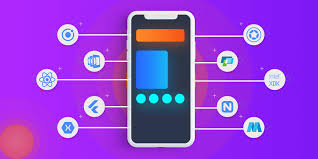
Mobile Applications:Java is considered as the official programming language for mobile app development. It is compatible with software such as Android Studio and Kotlin.
Enterprise Applications:Java is the first choice of many software developers for writing applications and Java Enterprise Edition (Java EE) is a very popular platform that provides API and run time environment for scripting. It also includes network applications and web-services. JavaEE is also considered as the backbone for a variety of banking applications which have Java running on the UI to back server end.

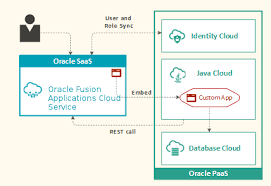
Cloud-based Applications:There is a wide range of Java Cloud development tools like Oracle Java cloud service which serves as a platform to create and configure an Oracle Web Logic Server and the application environment without any hassle.
Gaming and Animation:Java is one of the best platforms to develop 2D Games. Since gaming is followed by animation, you can create your personalized version of the dinosaur game by coupling Java with CSS.

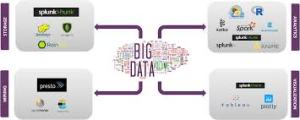
Big Data technologies:Java is the reason why the leading Big Data technologies like Hadoop have become a reality and also the most powerful programming languages like Scala are existing. It is crystal clear that Java is the backbone when it comes to developing Big Data using Java.
 Isn't it easy to grasp a skill with a little help from your “machine”?